Devices for the Mesh
Austin mesh uses two technologies(MeshCore and Meshtastic to power the network here in Central Texas. In order to connect to this network, a relatively low cost radio device is required. You’ll often hear these radios referred to as nodes. You can compare the best meshtastic nodes on RF Index.
- Suggested Hardware
- Building a Solar-Powered Repeater
- A brief history
- Versions
- Lessons learned
- Considerations for other climates
- Parts list
- Regular parts
- Robust RF Filtered
- A brief history
Suggested Hardware
If you want to explore ALL of the various options for LoRa devices for use on either MeshCore or Meshtastic, check out RF Index, which easily compares them in detail. This includes DIY, “Off the shelf”, solar, etc.
Companions / Clients
- DIY: Heltec T114 - The official Austin Mesh build from Andy Shinn
- Buy (smallest): SeeedStudio SenseCAP MeshTracker X1
- Buy (better antenna): Atlavox M1
Repeaters
- Best (~$250): Atlavox Beacon
- Good ($75-140): SenseCAP Solar Node P1 Pro
- DIY ($75-200): Build your own — see the parts list below
Building a Solar Repeater
A brief history
History of versions
We have tried 5 permutations of solar powering repeater nodes:
Version 1.0 RAKBox-B2 2000mah LiPo
Using RAK RAKBox-B2 Enclosure with solar panel. The panel was connected directly to the RAK Wireless WisBlock Starter Kit US915. We connected a 2000 MAh Lithium Polymer battery directly to the RAK board. We drilled a hole in the top of the box and attached a fiberglass antenna, which was connected to the RAK board with an iPEX to N-Type connector. We mounted this on top of one of the UT buildings and it died within a month. The 0.4 watt panel is way too small.
Version 2.0 USB Solar
Same as 1.0 but we added a second 5 watt solar panel that was connected to the RAK board via USB. Also died within a month.
Version 3.0 Internal Solar, Power Module, 18650’s
To minimize the amount of components outside the box we used a much larger box with a clear lid and placed the solar panel inside the box. We added a Texas Instruments Green Power Module between the solar panel and the RAK board to help regulate the power. For batteries we switched to using four 18650 batteries and we also added an overdischarge protection circuit from Voltaic Enclosures (not to be confused with Voltaic Systems) between the battery and the RAK board to provide clean shutoff when battery voltage fell below 2.5v. We mounted this on top of the UT buildings and it died in 3 months.
Version 4.0 External Solar
Same as Version 3.0 but we mounted the solar panel outside of the box (using a smaller box). We mounted this on a pole and it died within 3 months.
Version 5.0 (Currently running)
For this version we stopped using the RAK’s solar and battery connectors entirely. Instead we connected a large 12 watt solar panel to a Voltaic Systems battery via USB and then connected the battery to the RAK board via USB. The Voltaic Systems battery acts as the solar charge controller and also acts as the overdischarge protection circuit; the battery will charge at a range of voltages from the solar panel (if it gets shaded) and the battery will shut off if the voltages drops too low and will reboot itself once it has recharged sufficiently.
Lessons learned:
- Don’t trust the RAK board to handle varying solar voltage or varying battery voltage. It is very unhappy if either voltage goes outside of a narrow range. In fact there is a known issue where the Nordic nRF52840 module inside of the RAK 4631 chip causes it to enter a “Super Deep Sleep” fault state when it is supplied with 3.3V. This means when the battery voltage falls too low the RAK chip shuts down and can only be rebooted manually.
- Solar panels: bigger is better. 10 watts or more is ideal.
- Battery: bigger is better. 5,000 mAh or more is ideal.
- Antenna: fiberglass antennas are the most robust and can handle wind, rain, and UV light better than rubber ducky antennas.
- Heat can kill the battery – it is best to shade the box containing the battery.
- Don’t add any modules. The GPS module increases battery usage significantly and is unnecessary if the repeater is in a fixed position.
- Seal everything properly and make sure water has a way to get out of the case. Use o-rings for the antenna mount and wrap connectors in proxicast. Add an air vent plug to the case so any condensation has a way to escape. For high humidity environments, spray the electronics with conformal coating.
These are lessons learned from Austin Texas, where the main environmental stressors are heat and thunderstorms. In the summer of 2023 we 80 days over 100° F (38°C) and we had a stretch of 11 days over 105° F (40.5°C), during which two radios died. We also can have both high humidity and high temperature at the same time in Austin; in the summer the weather would swing from 80° F (27°C) with 85% humidity in the morning to 105° F (38°C) with 25% humidity in the afternoon. Weather history here. Our learnings are probably applicable to other southern and desert climates.
Details on the boards that died
One was filled with water, the antenna seal didn’t work. That’s why the vent valve at the bottom is so important. One died because it got stuck in the low voltage state that requires a physical reset - that’s fixed with the Voltaic packs. The third one died due to unknown causes but heat is suspected. When we tried to reboot with with wall power it wouldn’t turn on - so the board was totally fried. That one I also sprayed with covalent coating nasty stuff that we won’t use any more.
Considerations for other climates
- Northern Climates and extreme cold
- This isn’t from our experience, but we felt it was so valuable that we shoud link to it here. YYC Mesh, a group in southern Alberta as well as the Greater Vancouver/Victoria recently published their findings on batteries in cold temperatures.
- LiPo and Li-ion are fine(0 failures)
- Capacity IS reduced. 3000mAh minimum kept nodes up and charge rates low(good thing)
- Charging creates heat, enclosures trap heat
- nRF52 > ESP32
- Solar panel angle matters
- Coastal Climates: salt spray and condensation from fog can kill electronics quickly. In coastal climates it is best to spray the electronics with conformal coating.
MeshCore and Meshtastic Solar Repeater Parts list
With all that said, here is the parts list for our most-preferred way to build a solar powered repeater. This design doesn’t require any soldering or complicated connectors. It also doesn’t require any battery management chips (which often have long shipping lead times and can be hard to get). For this design the solar panel is connected directly to the battery pack via USB. Then the battery pack is connected to the board via USB. The Voltaic Systems V25 battery is nice because it is optimized to charge from a solar panel and it is set standard to an “always on” mode which means the battery bank does not shut off after a set amount of time like other battery packs – this is useful as the RAK chip uses very little power and can trick other battery packs into shutting off. The other really nice thing about the Voltaic pack is than when it drains down completely it shuts down, but then once the solar panel has sufficiently charged it back up it will automatically turn itself back on again. The RAK radio uses between 100 and 1000 mAh per day, with about 400 mAh per day being average so theoretically the 6,400mAh Voltaic V25 could keep the radio running for 16 days without solar.
Standard Parts
| Item | Product Name | Cost | Link |
|---|---|---|---|
| Solar Panel | Soshine 6W | $15 | Amazon |
| Battery | Voltaic Systems V25 | $45 | Amazon or Volatic Systems |
| Rak Board | RAK Meshtastic Kit | $35 | Rokland or Amazon |
| Antenna Connector | IPEX to N Type Female | $4 | Rokland or Amazon |
| Antenna | 915 MHz 3 dBi N-Female | $39 | Rokland |
| Box | Waterproof project box with metal latch, 5.9”x3.9”x2.8” | $15 | Amazon |
| Air Vent Plug | VENT-PS1YBK-N8001 | $2 (4/$7.66) | Amazon or Mouser |
| USB Cable Pass-Through | 3/4 NPT Cable Gland | $2 | Amazon |
| Antenna Wrap | Proxicast | $2 | Rokland or Amazon |
| Coax Cable | 3’ KMR400 N Female to N Male | $14.99 | Rokland or Amazon |
| ~$174 | |||
| Some of these links are affiliate links. Any commission we earn helps support AustinMesh’s community network at no extra cost to you. Privacy policy | |||
RF Filtered Parts
One of our nodes is on top of a building surrounded my 2200w of public service antennas which operate around 850mhz. The result is that the RAK (and any other) board is quickly desensitized. We’ve had the best success doing 2 things. Keeping cable runs as short as possible, and use a notch or bandpass filter.
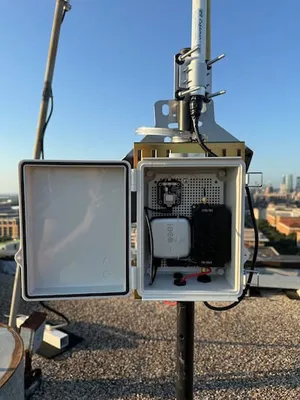
| Item | Product Name | Cost | Link |
|---|---|---|---|
| 20” Coax | SMA Male to N-Female 240 | $15 | Rokland |
| Ipex/SMA | 4” IPX to SMA Male | 5 for $9 | Amazon |
| Cable Gland for Coax | 1/2” Cable Gland | 10 for $9 | Amazon |
| Cable Gland for Solar | PG9 Cable Gland | 40 for $9 | Amazon |
| Air Vent Plug | VENT-PS1YBK-N8001 | $2 (4/$7.66) | Amazon or Mouser |
| Antenna | 5.8dbi N-Male Omni | $15 | Rokland |
| Solar Panel | Voltaic Systems 10w | $65 | Volatic Systems |
| Solar Panel Bracket | BK103 | $19 | Volatic Systems |
| Solar Panel Adapter | Female 3.5x1.1mm to USB C | $3 | Volatic Systems |
| Battery | Voltaic Systems V25 | $44 | Amazon or Volatic Systems |
| Enclosure | IP67 11.2”x7.7”x5.1” metal latches | $23 | Amazon |
| USB C | Right angle USB C | 3 for $8 | Amazon |
| RF Filter | Acasom 915MHz Cavity Filter | $65 | Acasom |
| Node | Your choice | $50 | n/a |
| $331 | |||
| Some of these links are affiliate links. Any commission we earn helps support AustinMesh’s community network at no extra cost to you. Privacy policy | |||
Aerial Nodes
As you may already know, the mesh technology we use relies on the LoRa technology in the 900mhz frequency range. This means that connection is dependent on Line of Site(LoS) between the antennas. The easiest way to ensure LoS is with height. The easiest (though temporary) way to get height is through an aerial platform including but not limited to UAVs(drones or planes) or kites!
Drone Nodes
In our starting a similar network section we discussed the intentional usage of drones to help grow your network. This section will cover some key tips around hardware, strategy, and safety.
- Schedule: Most drones will only fly for 15-30m per battery. Schedule communication windows specifically so that batteries are not wasted. Consider prescheduling times with your group to either have multiple drones up at once, or extend windows by alternating who is in the air.
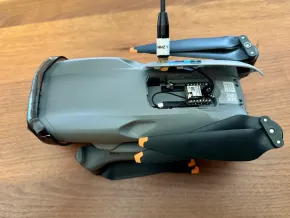
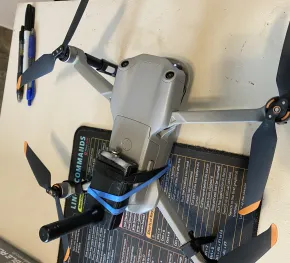
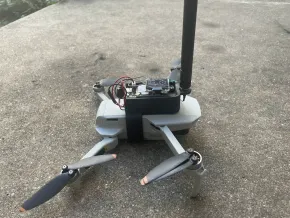
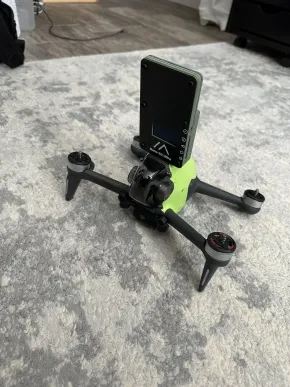
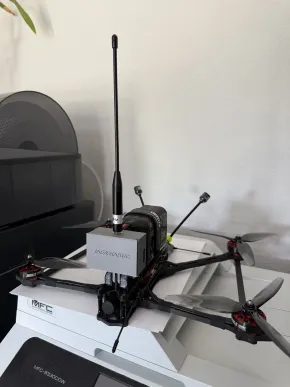
- Weight: Due to the short flight times, your node can use a very small battery. Think 100mah. Strip all non necessary items.
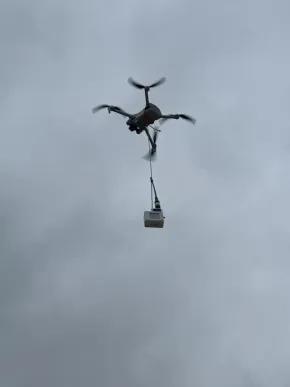
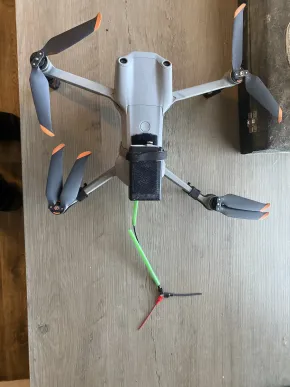
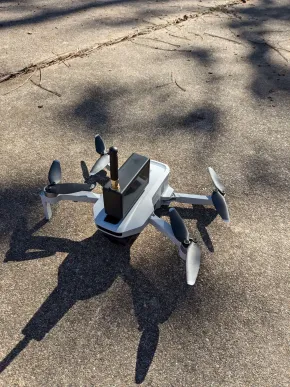
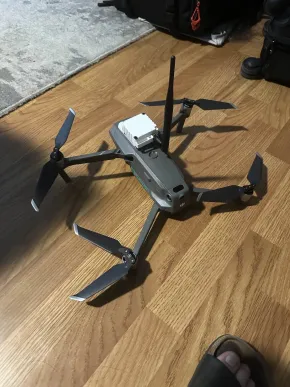
- Safety: Fly in open areas. Use minimum height necessary. Make sure the node is secure and can’t tip or the antenna fold which may hit propellers which will cause a crash. Avoid hanging the node unless there is no other solution. Hanging nodes easily swing up and hit propellers.
- Configuration: Use 2 nodes. One on the ground that you connect to with your devices and one on the drone. Set the node on the drone Router or Router Late to ensure messages actually pass through. If set to Client it may not retransmit the packet as it has already heard the packet from multiple other ground nodes. Consider setting the ground node to Client Mute.
Examples
- DJI Air 3 (affiliate link)
- Seeed/XIAO
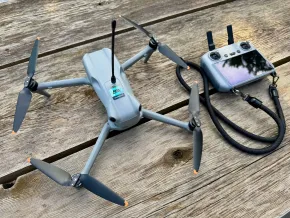
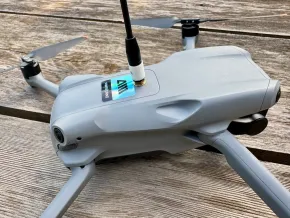
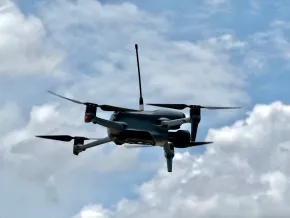
- DJI Mavic Mini (affiliate link)
- LilyGo T-Echo
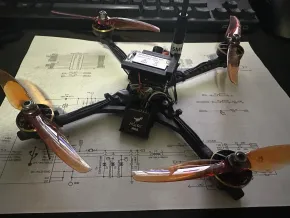
Other Examples
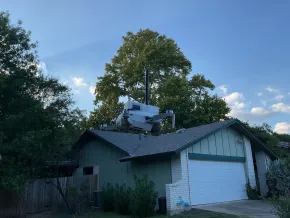
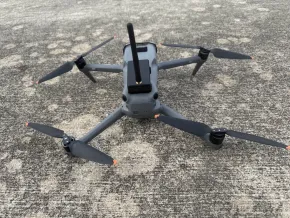
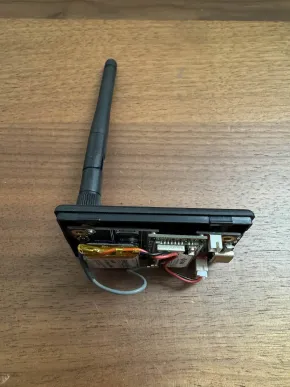
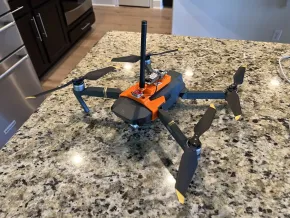
Kite Nodes
Read more about our Kite Node operations.
The content of this page was last verified on